MedLaunch — UX Redesign Case Study
MedLaunch is a healthcare technology platform designed to support hospital accreditation and compliance audits. This case study focuses on testing and redesigning the Surveyor Tool within the Healthcare Portal. I worked as part of a four-member UX research and design team on this project.
Role
UX Researcher & Designer
Duration
1 Month
Domain
Healthcare
Platform
Web
Inside a live hospital audit

Source: Healthicity
Hospital compliance audits unfold inside active clinical environments. Surveyors move between departments, balance conversations with documentation, and make decisions that directly affect accreditation outcomes. The tools they rely on must be predictable and fast, because attention is already stretched thin.
Where things broke down
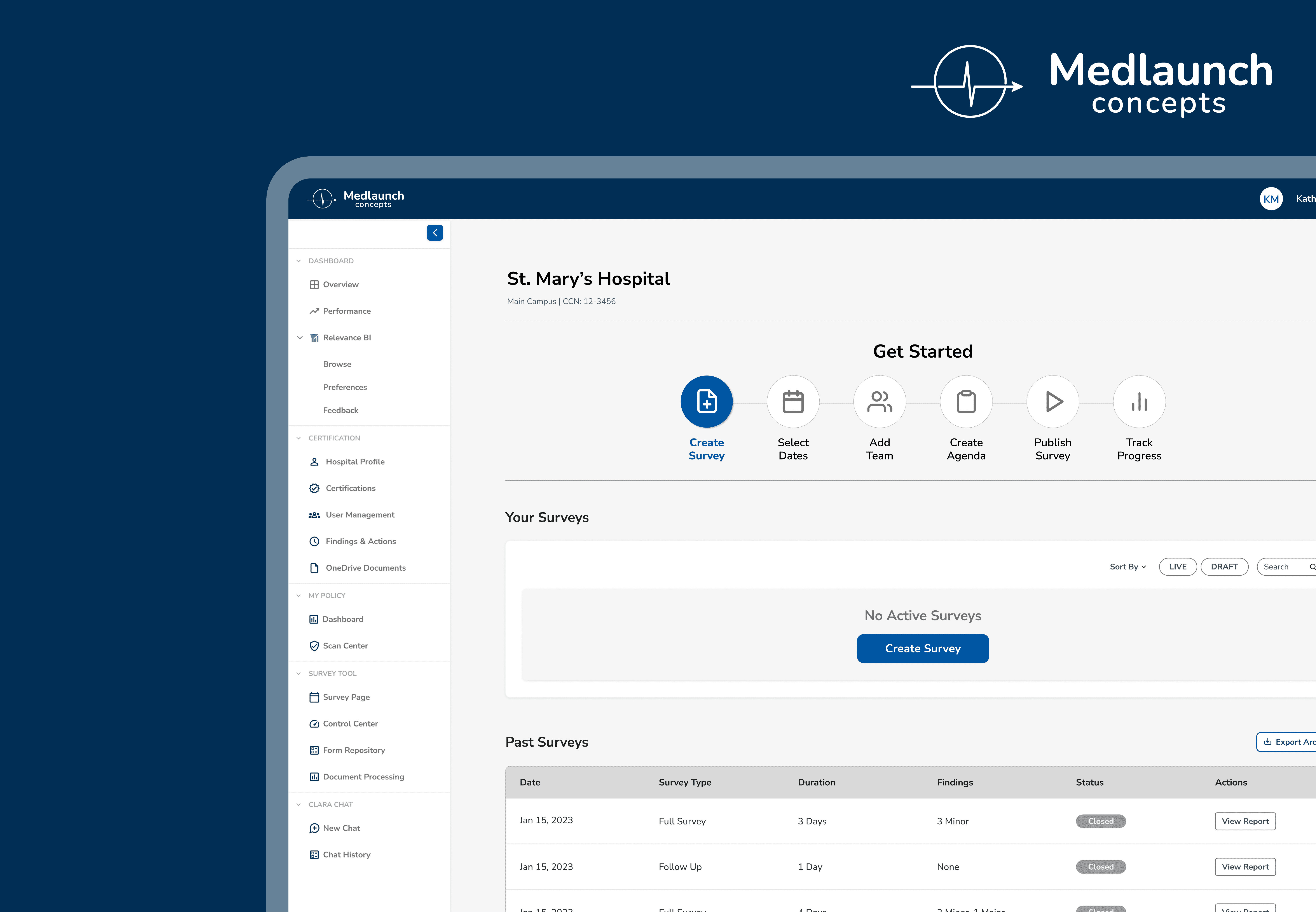
Although the Surveyor Tool appeared modern, it failed to support how audits actually happen. Users hesitated when starting tasks, lost context while planning multi-day schedules, and experienced friction when documenting findings. Even experienced healthcare and compliance professionals struggled to move confidently through core workflows.
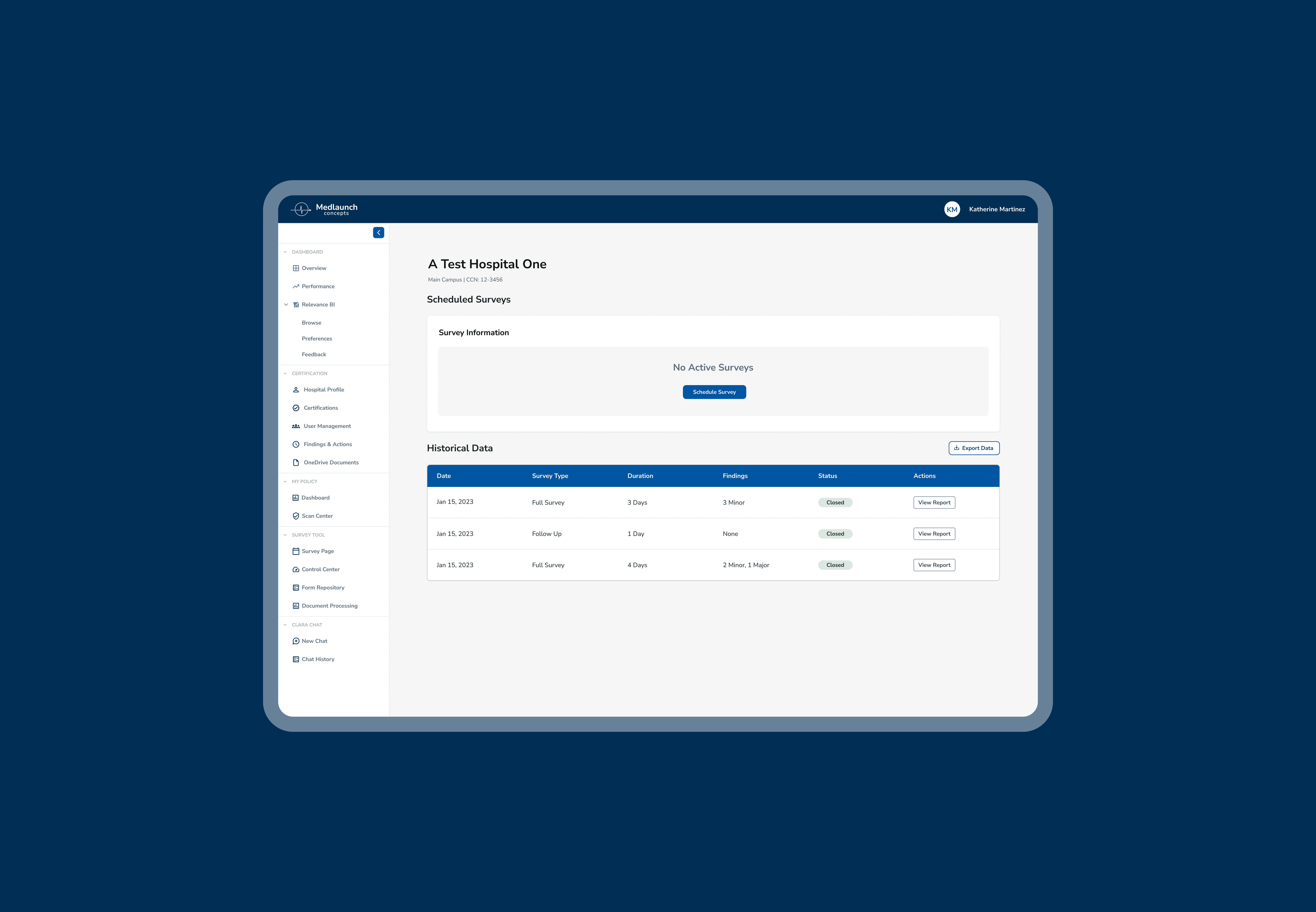
Initial Survey Creation Page
1
How we approached the problem
Rather than proposing solutions upfront, we observed users attempting realistic, end-to-end audit tasks. MedLaunch partnered with our team to evaluate whether the Surveyor Tool could realistically support auditors during live hospital surveys. Consistent breakdowns appeared across sessions, revealing gaps between the product’s structure and users’ mental models.
What surfaced during testing
Unclear starting point
Users paused at the beginning of tasks because it wasn’t obvious where or how to start.
Key information was hidden
Key context about schedules, priorities, and next steps wasn’t visible when users needed it.
Users relied on workarounds
Instead of following a smooth flow, users jumped between sections or double-checked their work to stay oriented.
Users wanted structure, not more features
Participants looked for clearer steps and hierarchy rather than additional options or functionality.
Summarizing the Findings
Across usability sessions, friction consistently appeared at moments where the system failed to guide users forward. Participants hesitated when starting tasks, lost context while planning multi day audits, and relied on workarounds to compensate for missing structure. Rather than asking for more features, users expected clearer entry points, visible priorities, and predictable workflows that matched how audits actually unfold.
2
The design opportunity
The opportunity was not to add more features, but to remove ambiguity. The Surveyor Tool needed to make next steps obvious, priorities visible, and change easy during live audits.
Starting a survey without hesitation
Before
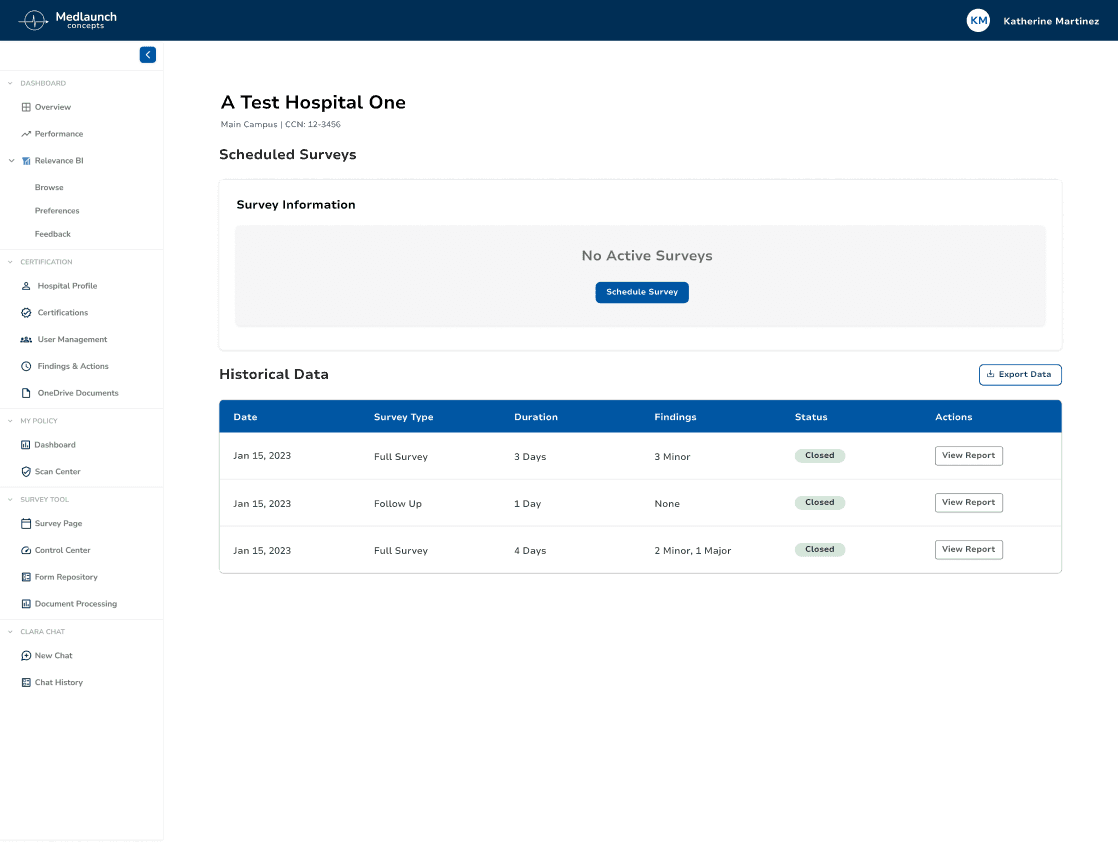
Users hesitated at the first step because the primary action felt like a later-stage task.
After
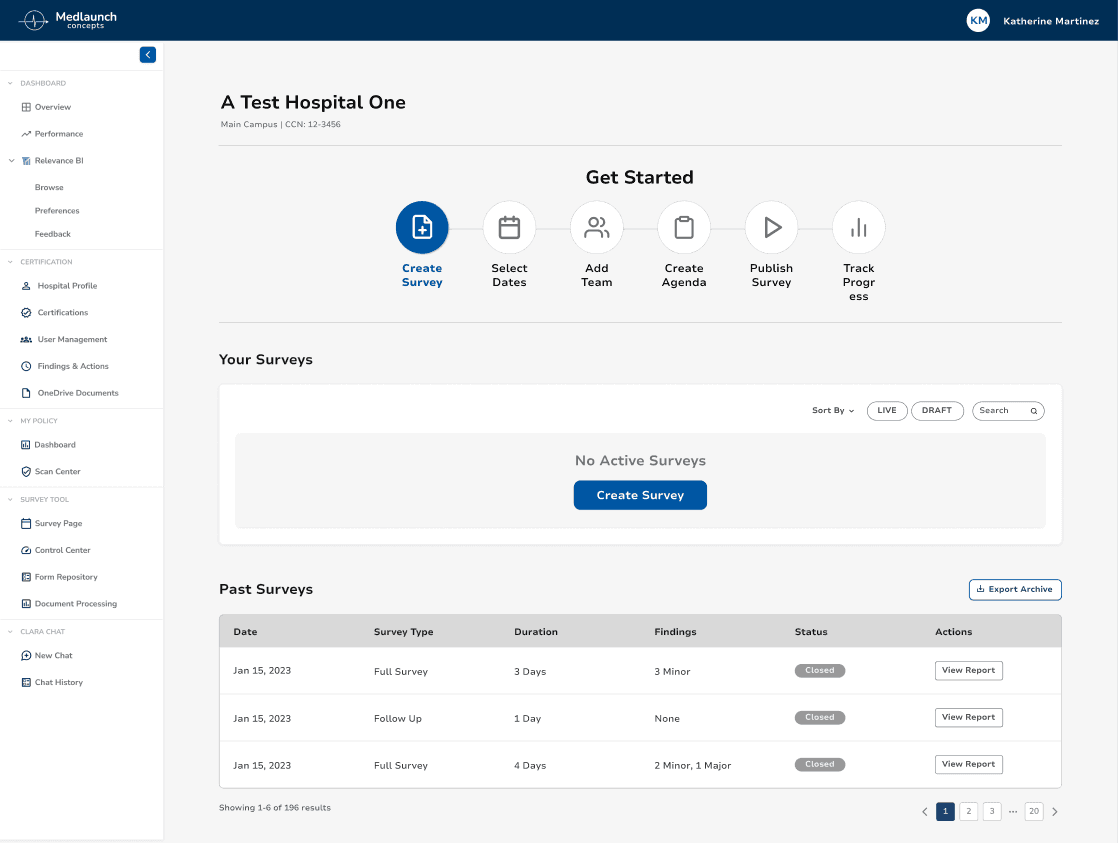
We introduced a guided entry flow with a clear starting point and visible progress.
Planning audits at a glance
Before
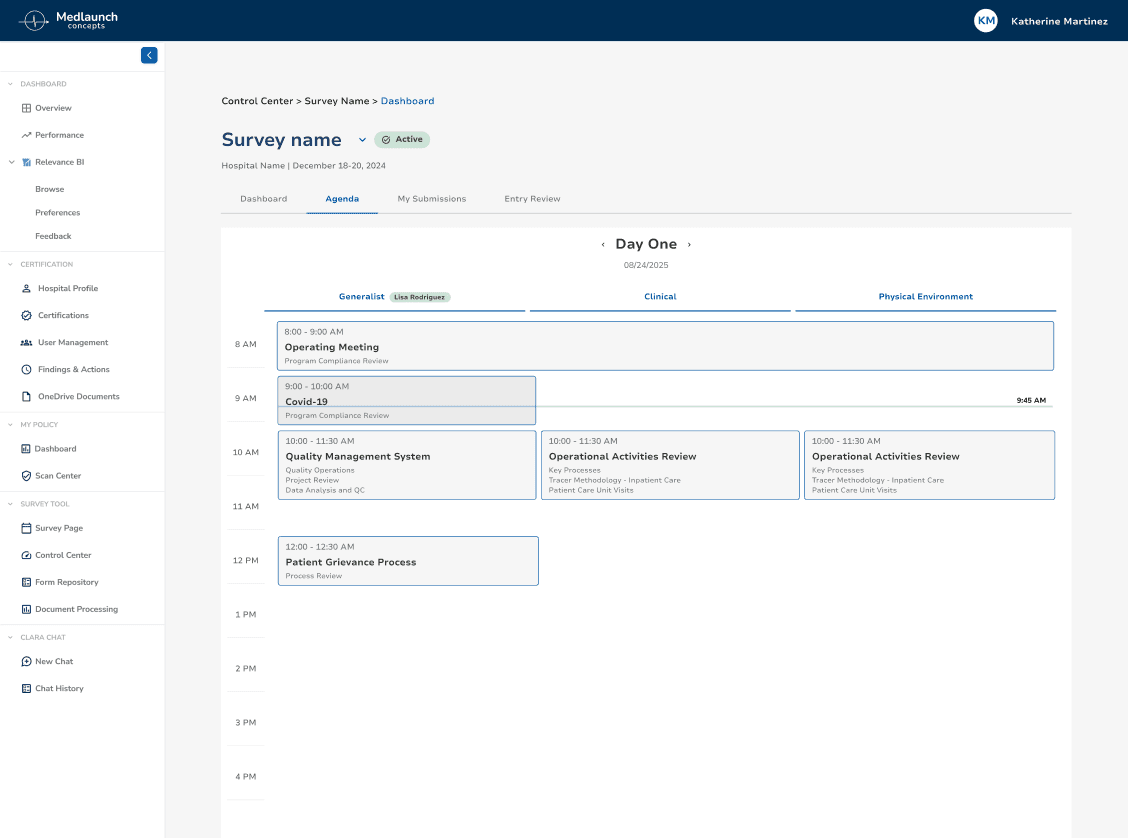
Multi-day audits were managed one day at a time, forcing users to rely on memory.
After

We surfaced multi-day context, priorities, and flexible adjustments for live audits.
Reducing friction in documentation
Before
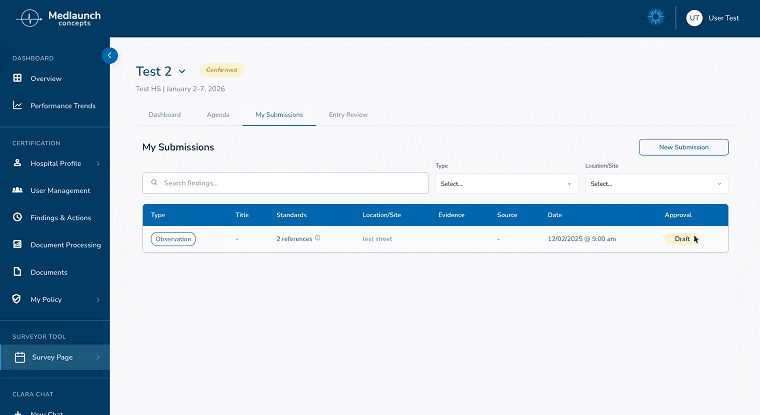
Splitting submissions and review created unnecessary decision-making.
After

We consolidated documentation into one clear, focused submission flow.
1/3
1/3
3
What this work changed for me
Designing for healthcare compliance reinforced how critical it is to align interfaces with real behavior instead of idealized workflows. In environments where mistakes are costly, clarity and flexibility matter more than feature density. This project strengthened my ability to translate qualitative user behavior into system-level UX decisions that respect real-world constraints.