Visualizing Student Loan Debt
This project explores how student-loan borrowers in the U.S. and India understand their repayment timelines and make financial decisions. Through research, IA, and iterative design, my team and I created a mobile app concept that simplifies loan data into clear visualizations and plain-language explanations, helping users feel more confident and in control of their repayment journey.
Role
UX Researcher & Designer
Duration
3 Months
Domain
Finance
Platform
Mobile
Summary
This project aimed to make student-loan repayment easier to understand for borrowers in the U.S. and India. The challenge was to translate complex financial concepts into a clear, emotionally supportive mobile experience. We researched real borrowers, mapped how they think about debt, designed a calm repayment visualization tool, and tested it with users to refine the final product.
Scope
The assignment began with a broad prompt to help students visualize debt. We narrowed the focus to student loans because they are common, emotionally heavy, and structurally confusing. The scope included research, synthesis, IA, low-fidelity sketches, high-fidelity design, and testing.
Task and Objective
The objective was to create a mobile experience that reduces anxiety, increases understanding, and makes repayment timelines clear. The task was to design a product that borrowers could trust and use without feeling overwhelmed.
1
Initial Research
We conducted interviews with borrowers from both the U.S. and India and observed how a participant navigated their existing loan portal. We analyzed public loan-system data between both countries and reviewed basic privacy laws like GLBA, CCPA, and the DPDP act. These steps helped us understand how different repayment structures, cultural expectations, and digital behaviors shape borrowers’ needs.
Findings from Desk Research
43.2 Million
Student Loan Holders just in the US
45%
Do not know their repayment amount or Rate of Interest
60%
Confused about their repayment options
1/3rd
Avoid checking their loan balance because it triggers anxiety
This initial research confirmed that student-loan repayment is not only a financial challenge, but also a long-term cognitive and emotional burden.
Key Insights from User Interviews
Borrowers want clarity, not complexity. They struggle to understand interest versus principal. They avoid logging into loan portals because the information feels overwhelming. They want tools that feel emotionally safe and easy to navigate. Trust and privacy influence everything they are willing to share.
2
Research Synthesis
As we moved through our interviews and early desk research, a clear story began to emerge. Borrowers weren’t just struggling with numbers they were struggling with the feeling of being lost inside their own loans. Many of them described opening their loan portals the same way someone might open a difficult message: slowly, cautiously, and only when absolutely necessary. The data backed this emotional reality. Confusion around interest, uncertainty about repayment timelines, and fear of seeing a growing balance created a cycle of avoidance that left borrowers feeling powerless. It became clear that repayment wasn’t simply a financial process; it was an emotional journey with moments of anxiety, hesitation, and frustration. This understanding became the foundation for everything that followed. It guided the creation of our persona, shaped the borrower journey, informed our information architecture, and influenced the tone and clarity of every sketch and design decision we made.
Primary Persona
The persona was created to bring together the attitudes, goals, and frustrations we heard during research. It represents a recent graduate who feels anxious about repayment, relies on parental or peer advice, and wants a simple way to understand how long repayment will take.
Creating the persona helped us design with a specific emotional and behavioral profile in mind.

Maya Patel
Description
Maya Patel, a 26-year-old healthcare analyst from Atlanta with $68,000 in student loans, feels anxious and overwhelmed by repayment despite being financially stable. She struggles to track progress, understand interest, and manage scattered tools across spreadsheets and finance apps. She wants a clear, visual, and secure app that simplifies loan status, repayment planning, and overall control of her financial future.
Maya’s Habits, Challenges, and Interests
Maya tries to pay more than the minimum and often turns to Reddit, YouTube, and her own Google Sheets to make sense of her loans. She feels overwhelmed by loan terms, interest, and managing multiple accounts, and finds most tracking tools confusing. Outside her finances, she enjoys health blogs, yoga, meditation, local coffee shops, and personal finance podcasts.
Needs, Goals & User Story
A clear visual dashboard to show progress, interest, and repayment timelines
Non-intrusive notifications or reminders
Transparency around data usage and privacy
Ability to understand her loan payoff timeline
Space to explore different repayment options such as income-driven plans or refinancing
Clear breakdown of interest versus principal
Support in setting realistic monthly payments
“I want to clearly see how long it will take to repay my loans and understand different repayment options, so that I can make informed decisions and set monthly payments that fit my budget.”
Information Architecture
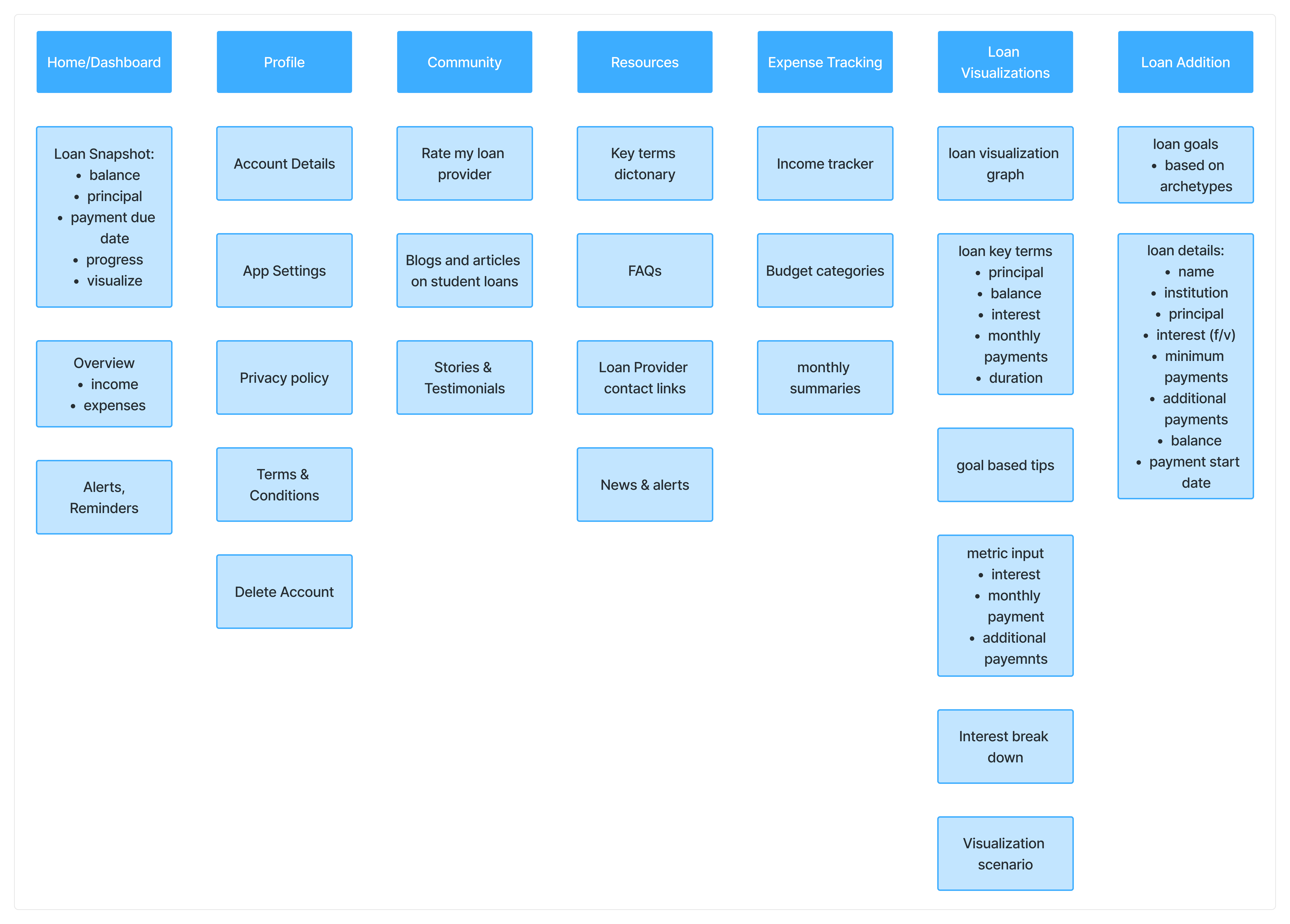
With the persona defined, the next step was to structure the experience around their needs and mental patterns. The information architecture ensured that users could move through the app without feeling overwhelmed. We organized the experience around a home dashboard, loan entry flow, repayment visualization, budget tools, literacy resources, and privacy settings.
Building the IA early helped create clarity in how each section supports borrower understanding.
Low Fidelity Sketches
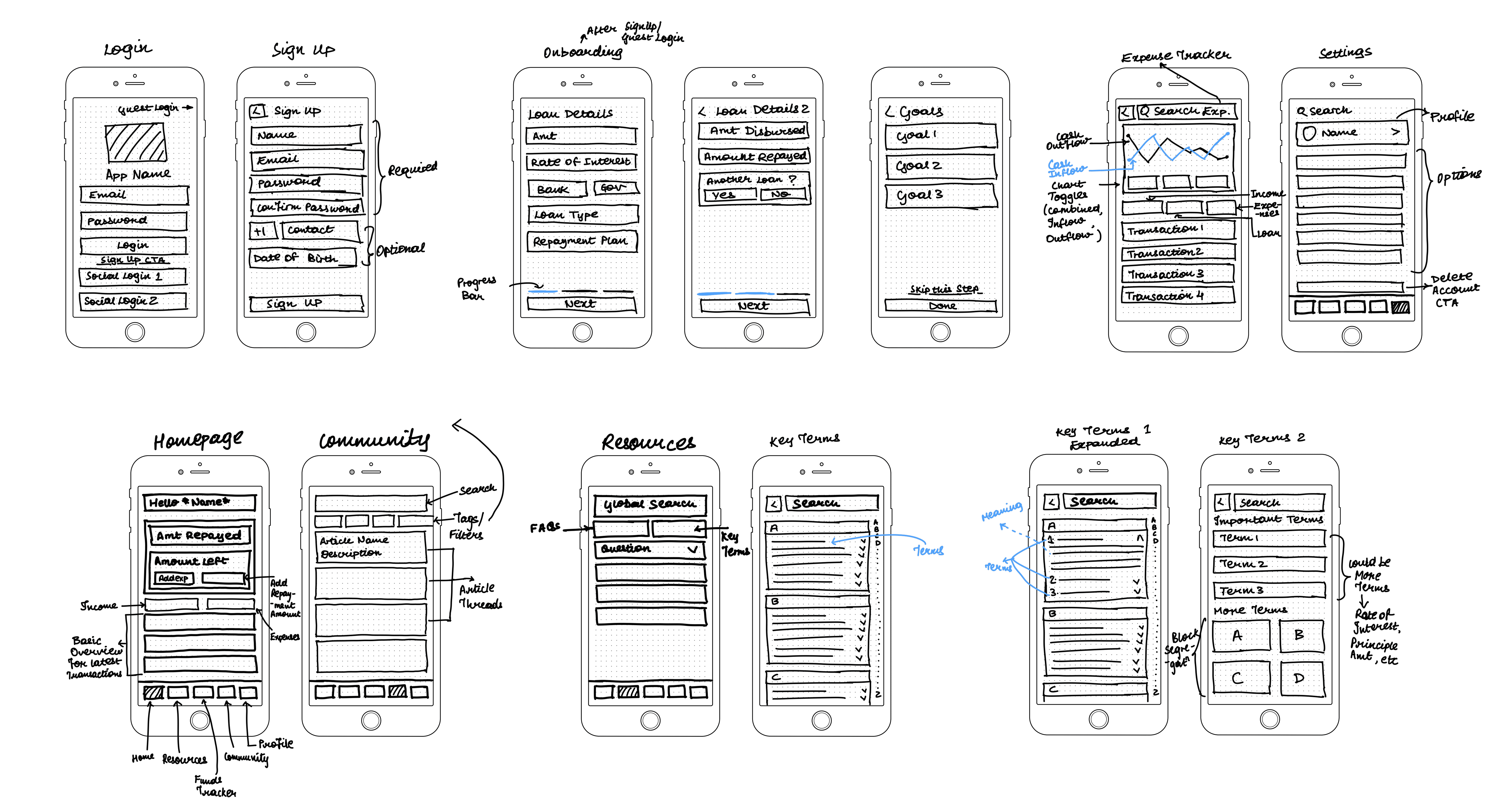
Sketches allowed us to explore ideas quickly before committing to final visuals. They helped us define how repayment information should flow, how charts should behave, and how users would move from input to insight.
These early sketches were essential for aligning the team before building the UI.
Usability Test
Conducted three moderated usability tests with student-loan borrowers.
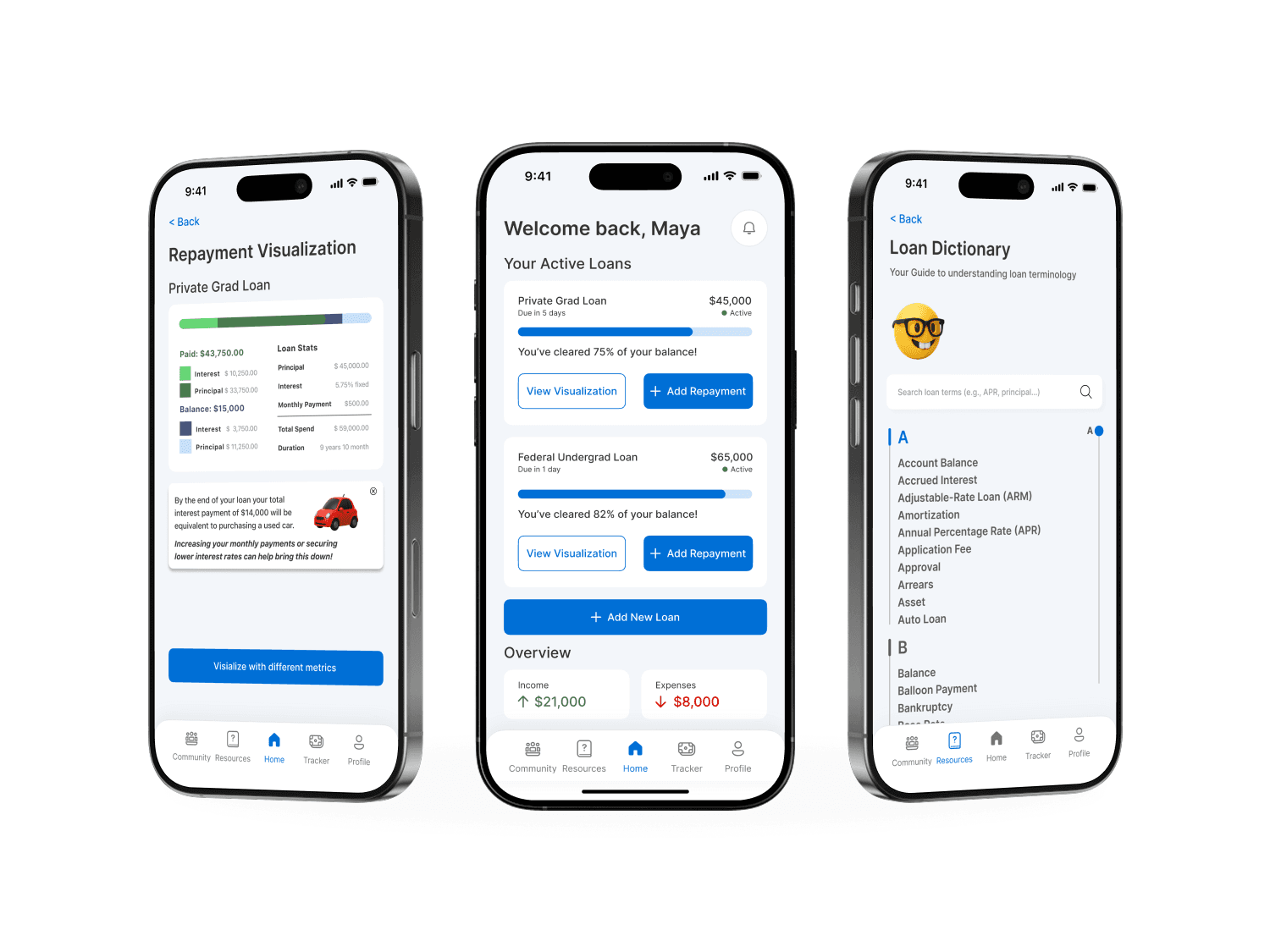
Users found the repayment visualization helpful, but several misinterpreted the color labels.
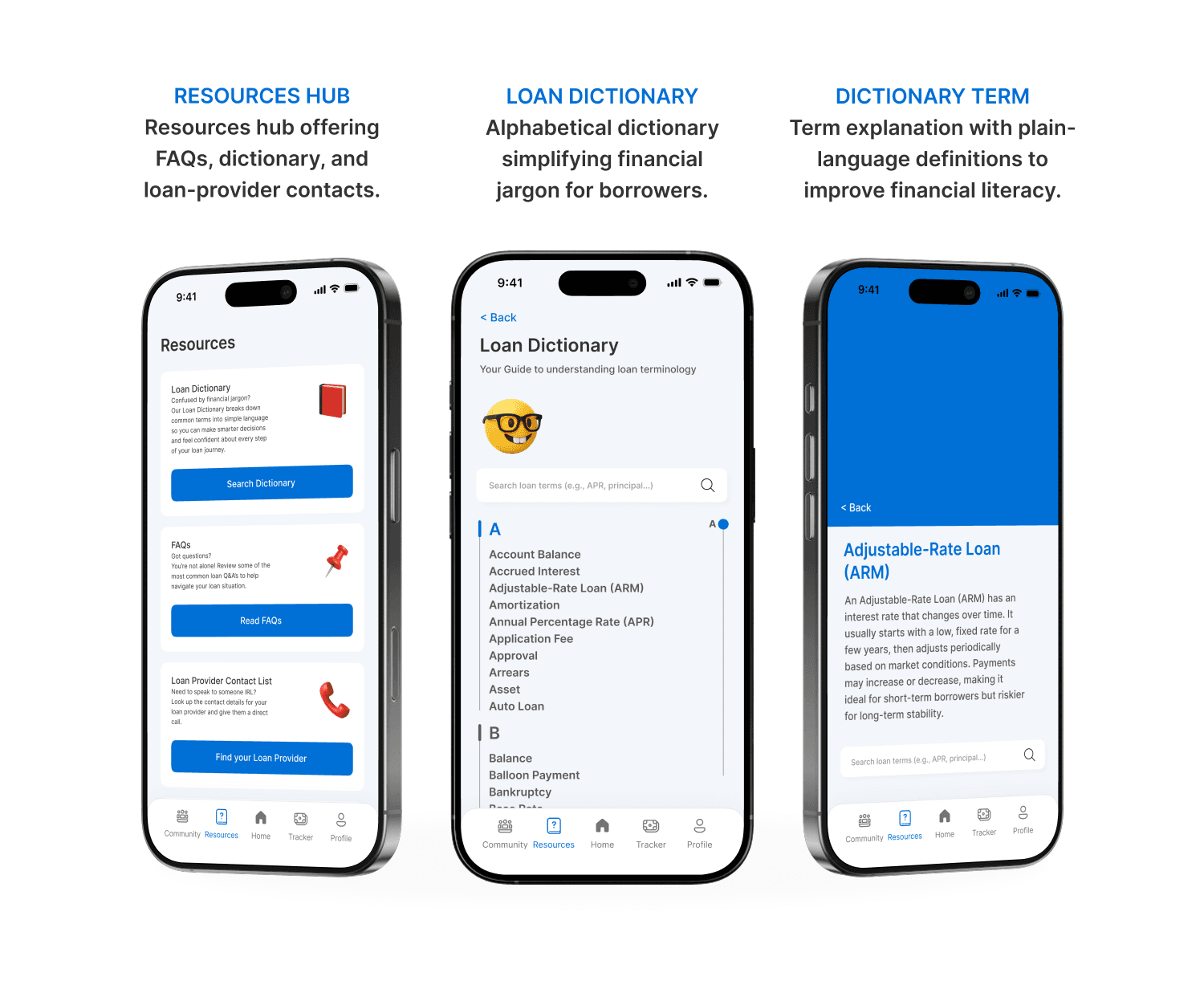
The loan dictionary felt dense, leading to the addition of short summary explanations.
The community feature raised trust concerns, prompting its removal from the final product.
Feedback from all sessions directly influenced the final design and validated key product decisions.
Final Designs
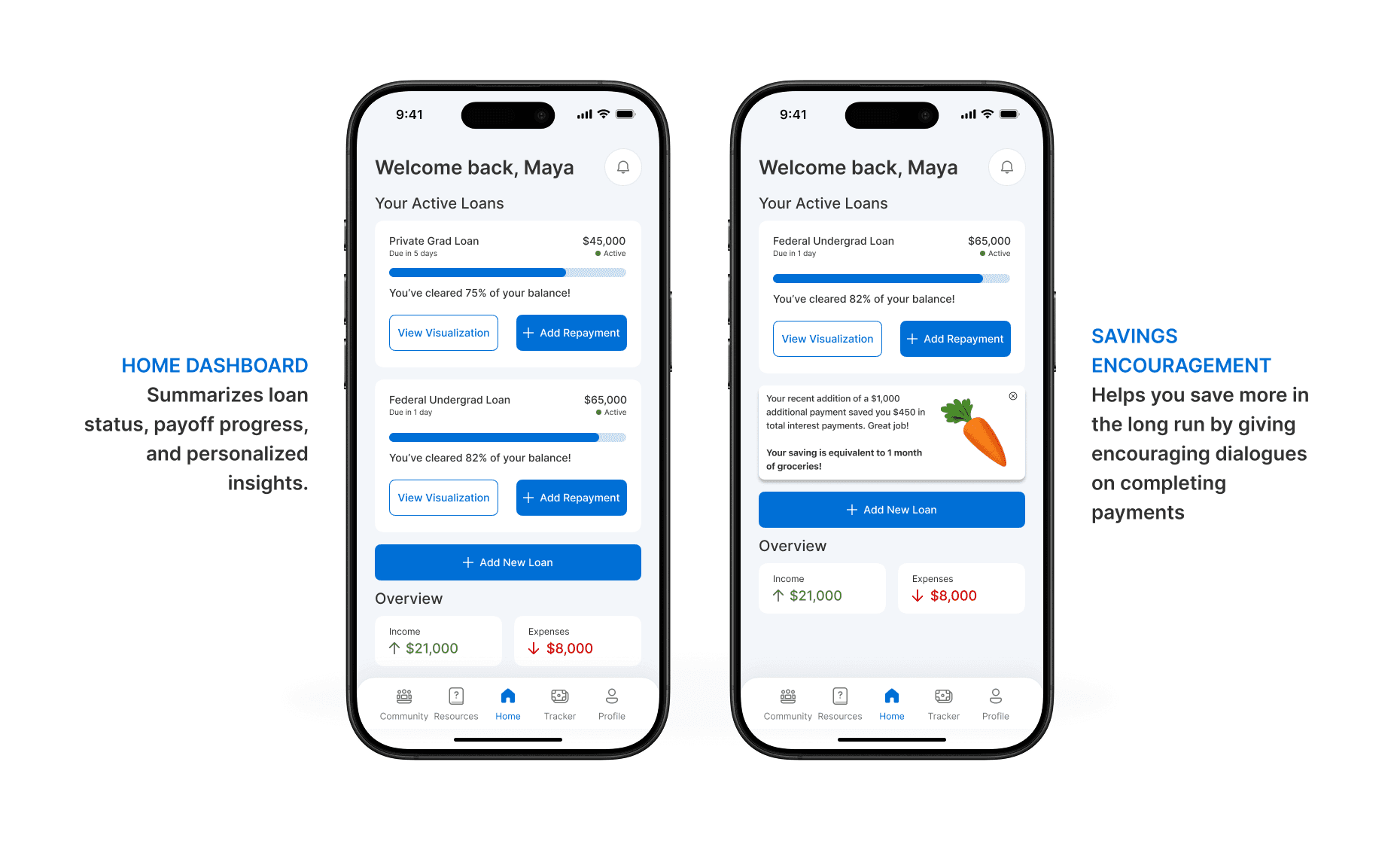
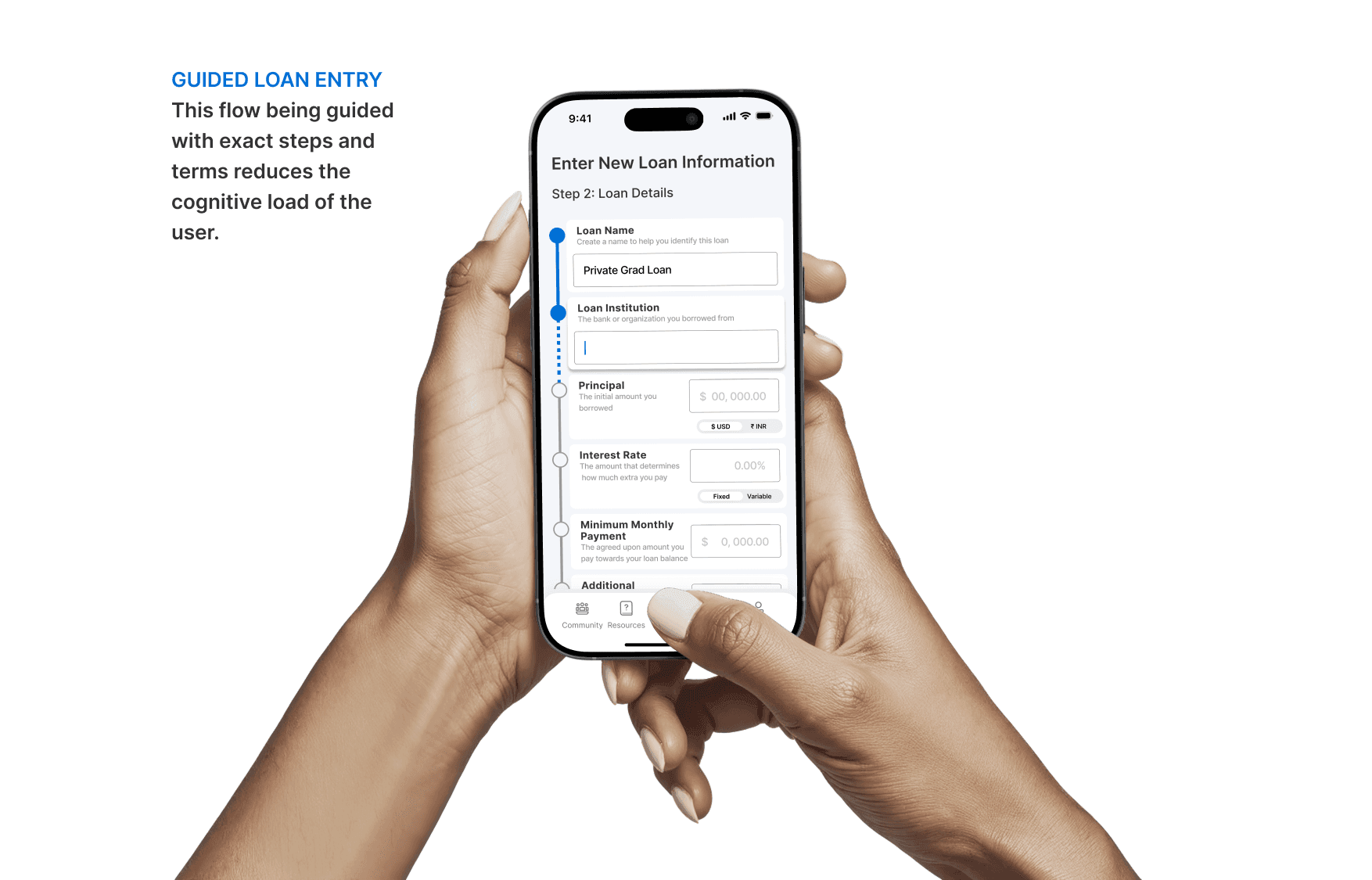
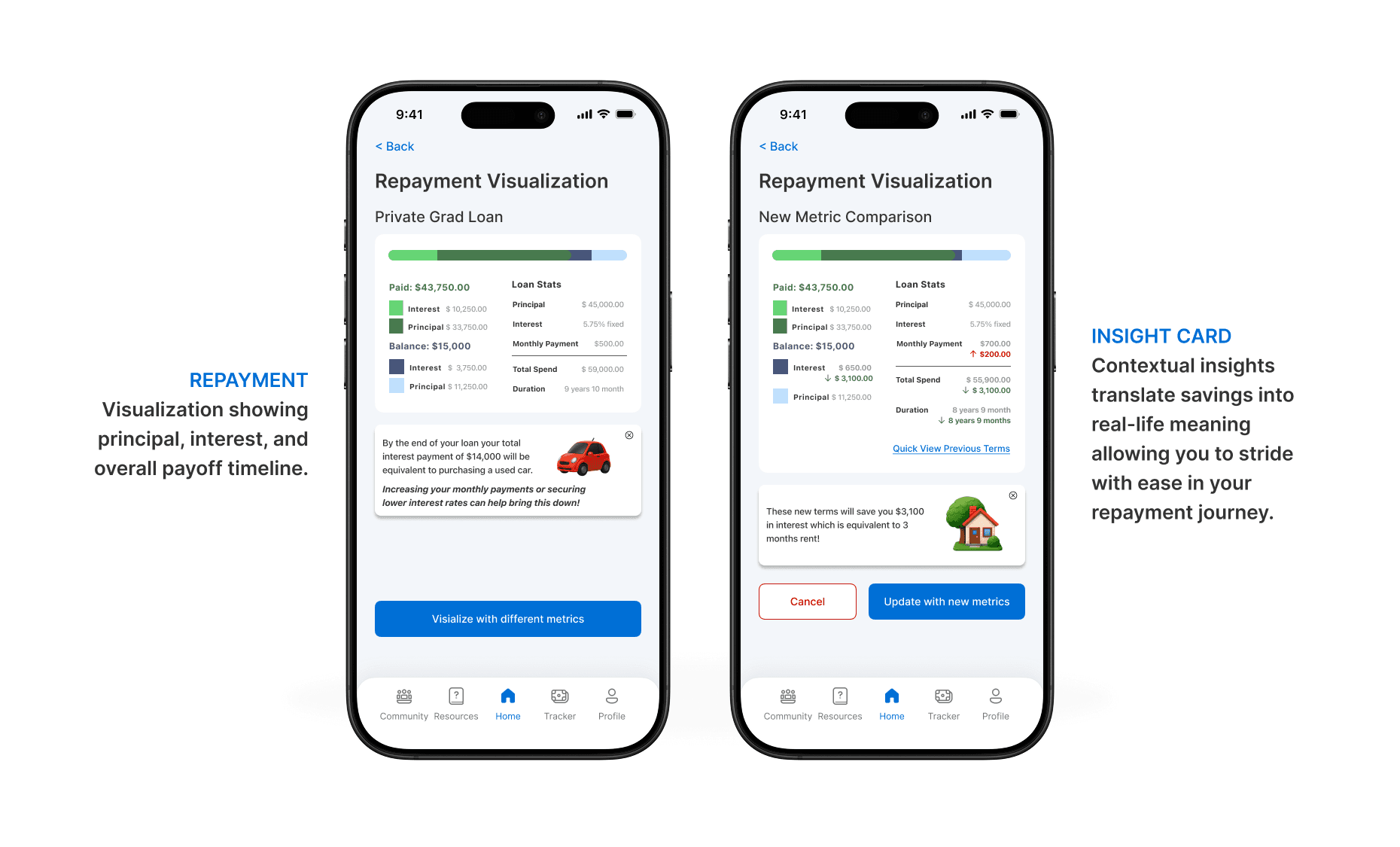
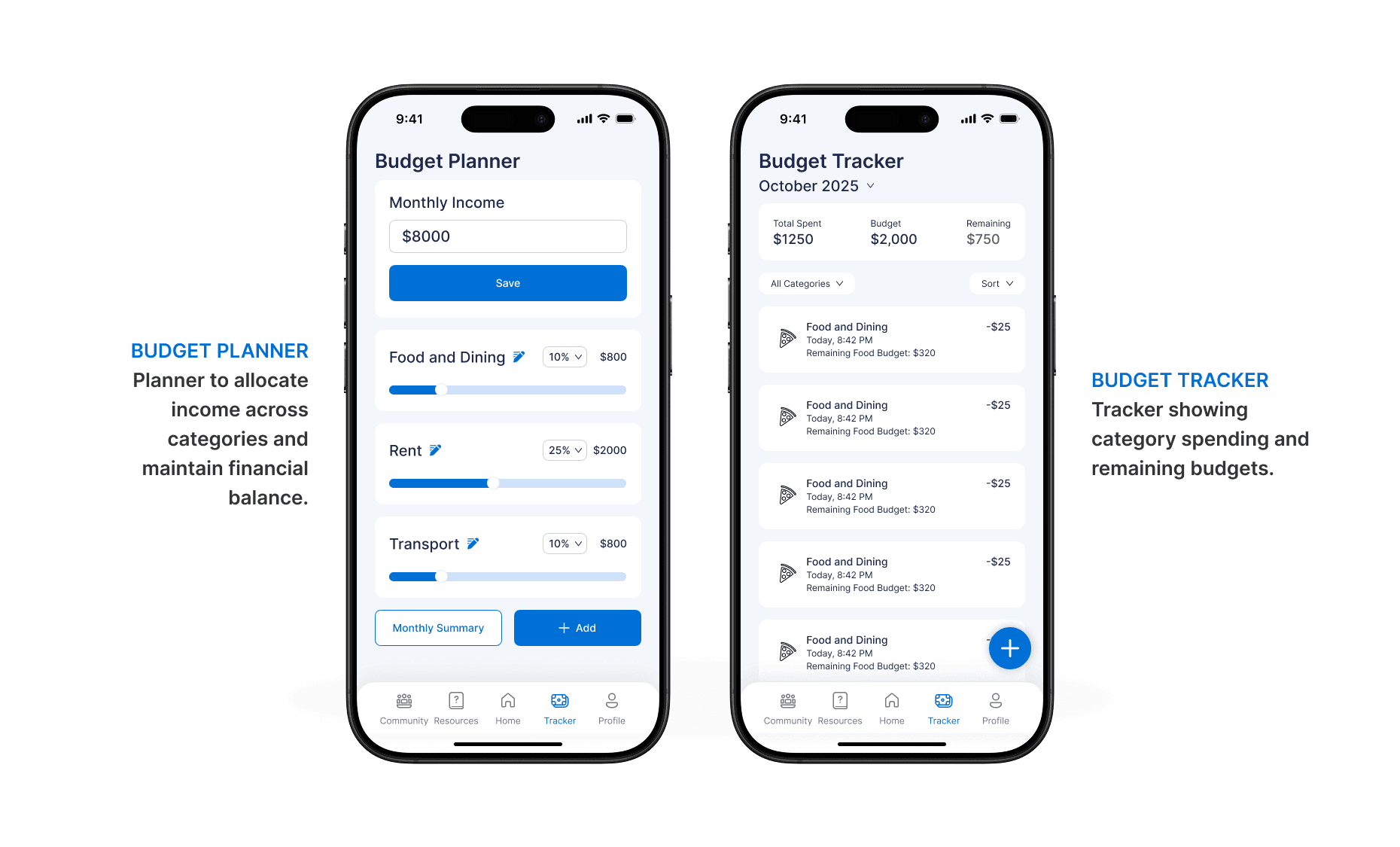
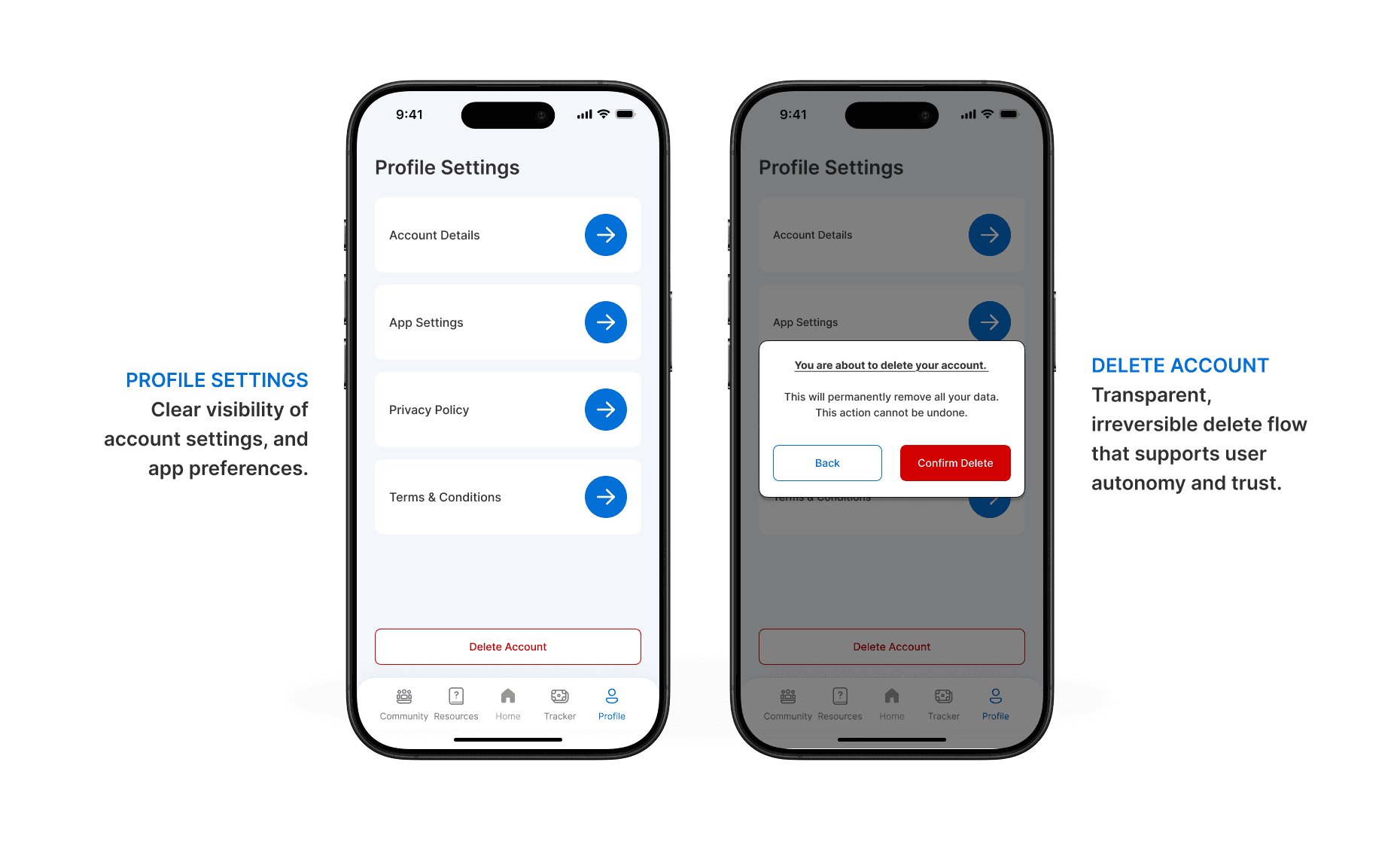
The final designs focused on delivering clarity through calm UI. The dashboard presents repayment progress in simple terms. The visualization tool shows payoff timelines, interest breakdowns, and savings based on user-adjusted metrics. Budget tools help borrowers understand how daily spending affects long-term repayment. A loan dictionary explains jargon in plain language. Every screen was designed to reduce cognitive load.
3
Reflection
Designing for finances means designing for emotions. This project taught me the importance of simplicity and clear communication in high-stress contexts. I learned when to remove features, when to prioritize privacy, and how to use visual storytelling to reduce anxiety. If I were to continue this project, I would explore secure integrations, more scenario simulations, and a phased trust-building community model.